
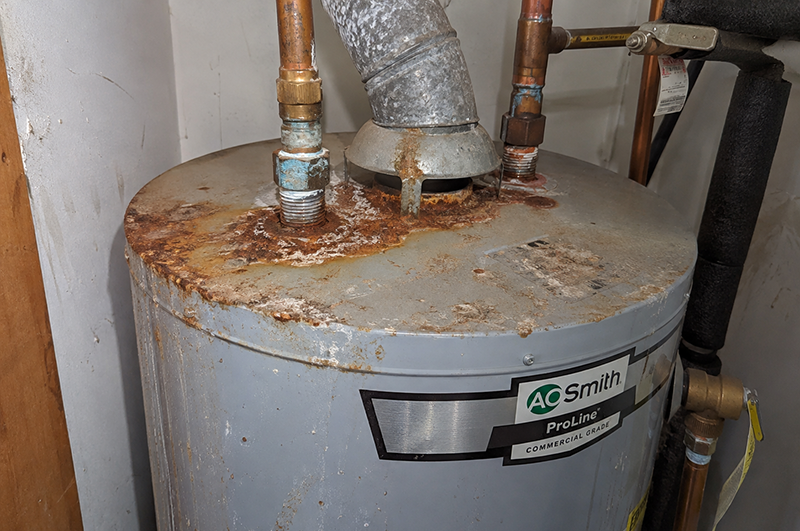
You walk into your garage or utility closet and notice a crusty, discolored buildup on your water heater. Rust is a major enemy of hot water heaters, but it does not always mean you must buy a brand-new system right away.
Is Your Rusting Water Heater Fixable?
If you find corrosion on water heater connections, valves, or external pipes, you can usually fix the issue by replacing those specific parts. However, if you see corrosion on a steel tank water heater or notice rust leaking from the bottom base, the internal lining has failed. A rusting tank cannot be repaired and requires an immediate system replacement to prevent severe flooding.
Understanding Why Tank Rust Happens
Water heaters deal with a constant mix of heat, water, and oxygen. This combination naturally accelerates the breakdown of metal. Manufacturers line steel tanks with a thin layer of glass to protect them, but tiny cracks develop over time.
Your system relies on an internal defense system called a sacrificial anode rod. This rod attracts corrosive elements in the water, so the steel tank stays safe. When the water heater corrosion rod completely degrades, the minerals in your water begin attacking the steel walls of your tank.
How to Spot the Different Types of Rust and Corrosion on Your Water Heater
You can catch plumbing issues early if you know exactly what to look for. Keep your eyes open for these distinct problem areas.
1. External Pipe Buildup
You will frequently find corrosion on top of hot water heater units where the water lines attach to the tank. This often happens because of galvanic corrosion reactions in water heaters. This reaction occurs when two different metals, such as copper pipes and steel nipples, come into direct contact. You will notice a greenish-white, crusty substance growing around the threaded joints.
2. Discolored Hot Water
Turn on your bathroom or kitchen faucets and look closely at the water stream. If your cold water runs clear but your hot water has a brown, red, or rusty tint, your internal tank is breaking down. This rust mixes with your supply and travels straight to your plumbing fixtures.
3. Hot Side Leakage
Pay close attention to hot-side corrosion symptoms on the water heater. The hot water outlet handles highly agitated, heated molecules that accelerate metal breakdown faster than the cold inlet side. Check the insulation rings on top of the tank for signs of moisture, dampness, or blistering paint.
4. Evaluating Corrosion on Hot Water Heater Pipes
You must look closely at your plumbing layout to determine if rust on your water lines requires a minor repair or a complete replacement. When you find corrosion on hot water heater pipes, you are usually looking at the result of a slow, unnoticed pinhole leak. Water seeps through the pipe’s threaded joints, evaporates due to the high heat of the hot water line, and leaves behind a crusty layer of copper oxide or rust.
If you leave these corroding lines alone, the copper or galvanized steel will thin until the pipe bursts. You can test the severity of the damage by gently wiping the pipe with a damp cloth. If the metal flakes away or water begins to pool immediately, the structural integrity of your copper or steel pipes has failed. Replacing these distribution lines early prevents water from running down the side of your unit and causing catastrophic corrosion of the main steel tank beneath.
Steps to Take When You Find Rust or Corrosion on Your Water Heater
Do not panic if you spot a problem. Take these organized actions to protect your home and determine your next steps.
- Check the exact location: Wipe down the area to see if the metal is flaking off the main tank or if a loose pipe fitting is dripping water onto the surface.
- Inspect the anode rod: Unscrew the hex nut on top of your tank to check your rod. If you see bare wire, replace it immediately to restore your water heater’s corrosion protection.
- Flush the tank system: Drain your system annually to remove settled minerals and sediment that can cause corrosion of the hot water heater at the base of your unit.
Reliable Internal Protection for Your Appliance
According to the International Association of Certified Home Inspectors (InterNACHI), standard tank water heaters typically last between 10 and 15 years. You can maximize this lifespan by maintaining your water heater corrosion protection systems. Inspect your sacrificial rod every two to three years. If you use a water softener system, check the rod annually because softened water accelerates the breakdown of the protective metals.
Get Professional Plumbing Help in Central Florida
When you are ready to fix your water heater or upgrade your system, contact Modern Plumbing Industries. Since addressing tank rust often requires reconfiguring or capping your existing water lines, it is the perfect time to have a professional ensure your entire system is in top shape.
Whether you need to replace a failing anode rod to prevent water heater corrosion or require emergency plumbing in Orlando, FL, our team is here to help.