Updated on: January 12, 2026
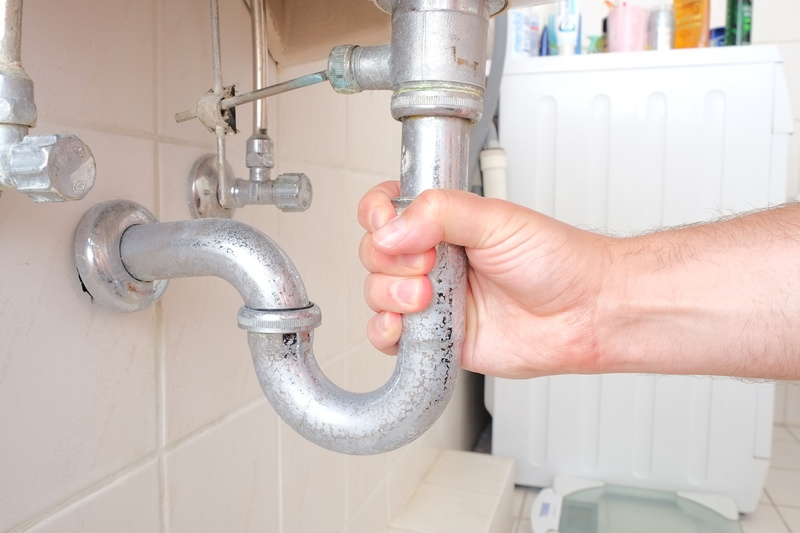
You can’t see most of the plumbing pipes in your house, and that’s a good thing! (Unless you want an industrial appearance for home décor and you don’t mind guests constantly tripping over exposed pipes.) However, there’s one important exception, and we bet it just popped to mind: the bent piece of drainpipe directly under your sinks.
This component is called the P-trap, and it serves an important function in your household plumbing. While it is an old invention, it remains the most effective way to use gravity to keep your home sanitary and pleasant. But what happens when it stops working, and how do you know if your home is up to code?
What Is a P-Trap? Why Is It Called That?
This is one of the first questions homeowners ask when looking at the pipe under their sink. You might describe it as U-shaped. So why isn’t it a U-trap?
The reason lies in the shape of the entire section of pipe, not just the curve. The P-trap plumbing configuration includes a straight “tailpiece” that leads into the curve and a horizontal “arm” that exits into the wall. If you tilt your head sideways, you can see that the assembly is indeed shaped like the capital letter “P.”
What Does a P-Trap Do?
It has a number of jobs, as described by the “trap” part of its name. So, how does a P-trap work to protect your home?
- It Blocks Sewer Gas: This is its most vital function. After water runs through the drainpipe, a small amount of water remains in the curved section of the P-trap, held there by gravity. This water acts as a liquid seal or plug, preventing dangerous sewer gases from drifting back up the sewer line and into your bathroom or kitchen. If you don’t have drains exuding noxious odors, you have your P-trap to thank. Regular drain cleaning keeps p-traps in good shape.
- It Catches Debris: It helps stop clogs from moving deeper into the system. Heavy debris (such as jewelry or large food particles) is more likely to get trapped in the curve. While a clog here can be annoying, it is much better than a blockage deep in the main sewer line, which is far more difficult to locate and repair.
S-Trap vs P-Trap
If you live in an older home in the Orlando or Central Florida area, you may have an outdated plumbing configuration known as an “S-trap.” Understanding the difference between a P-trap and an S-trap is crucial to your home’s safety.
- The P-Trap: Connects to a drain pipe inside the wall. It is vented properly to prevent water from being siphoned out of the curve.
- The S-Trap: Connects to a drain pipe coming up through the floor. It creates an “S” shape that often causes a siphon effect, sucking the water seal dry and allowing sewer gas to enter the home freely.
Because of this siphoning risk, S-traps are generally prohibited by modern plumbing codes. If you suspect your home still utilizes S-traps, or if you are remodeling a vintage home, contact our team. We can re-route your drainage to a code-compliant P-trap system that ensures proper venting and safety
Signs Your P-Trap Needs Professional Attention
P-trap assemblies handle large volumes of water daily. Over time, they can be damaged by age, vibrations, or chemical reactions from soap scum. Here are three signs you need to call a plumber:
- Persistent Sewer Smells: If a drain smells like rotten eggs, the water seal may be broken. This could be a dry trap, and all you have to do to fix the problem is run water down the drain for a few seconds; the p-trap will form a water plug again. If this doesn’t solve the problem, it could also indicate a venting issue or a cracked pipe that needs immediate diagnosis.
- Moisture in Cabinets: Even a tiny drip can ruin vanity cabinets and lead to mold growth. If you see water warping the wood under your sink, the P-trap connections may have degraded.
- Slow Draining: If the P-trap plumbing is clear but the sink still drains slowly, the issue is likely deeper in the sewer line and may require professional hydro-jetting or snaking.
Professional Drain Repairs in Orlando
While it might seem simple, the drain under your sink protects your family from sewer fumes and water damage. If you have a leaking P-trap, an outdated S-trap, or a drain that just won’t clear, don’t rely on chemical cleaners that can damage your pipes.
Call the experts for plumbing repairs in Orlando, FL. Modern Plumbing Industries, Inc. has proudly served Central Florida since 1975 with plumbing work both large and small. Give us a call or schedule an appointment with us online.